
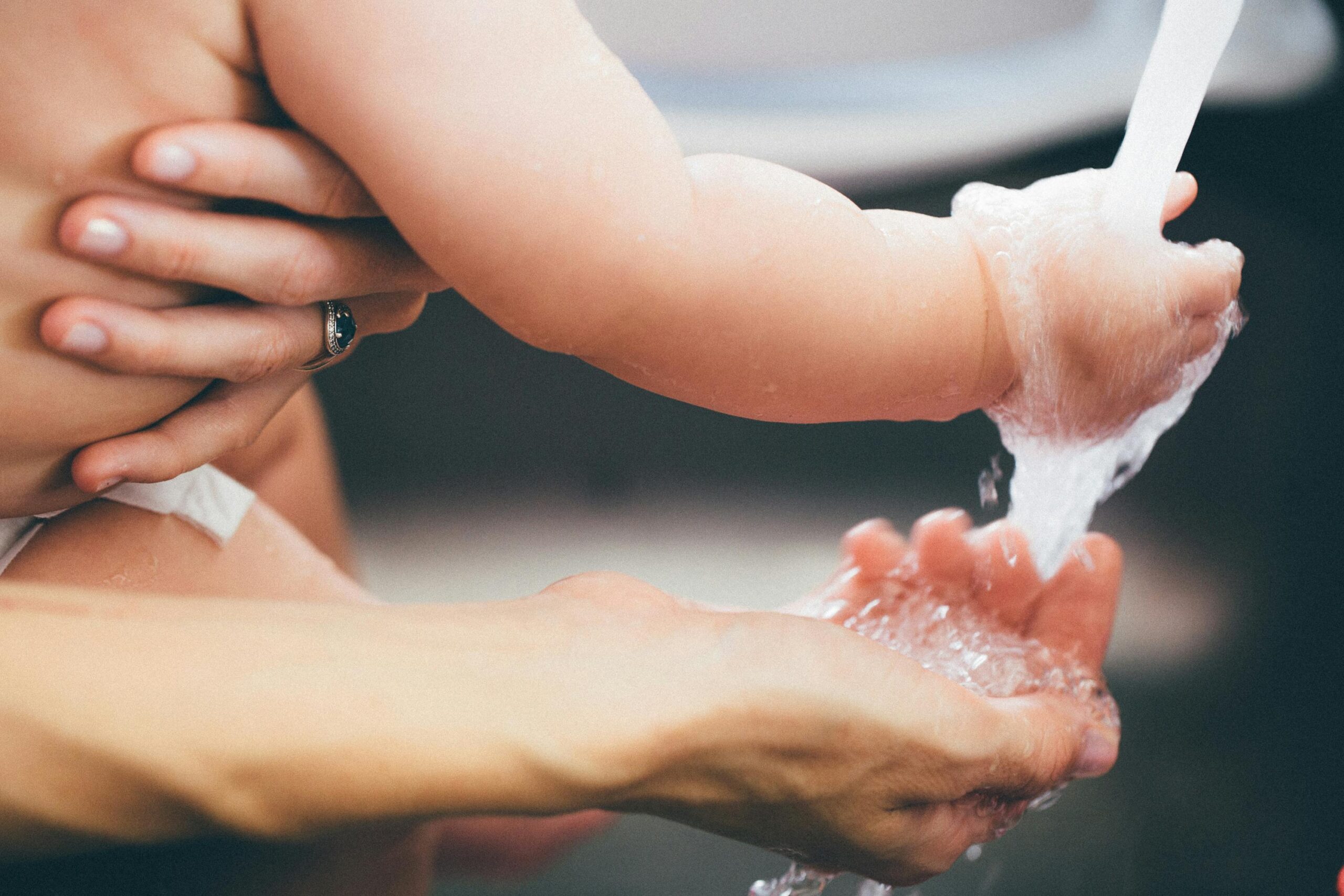
What is the best way to bathe your baby? By “best,” I mean the least stressful, most connected, and easiest way. I encourage you to go inward and tap into your intuition—your maternal/paternal instincts that may have been obscured by the brush of our modern-day material world. Tap into your baby’s needs. Feel into connection. What is the best way to you? Bathing baby naturally — intuitively — means something different to every parent.
The first time I bathed my second-born one-month-old daughter, I stepped into the tub cradling her naked body against mine—the place where she had lived for the past month, so near to where she’d lived nine months prior to that, where my womb, my voice, and my heartbeat were her entire world. We slowly eased into the warm water and rested peacefully. I breastfed her while gently scooping water over her body with my hand. We gazed into each other’s eyes, all warm and cozy, me smiling at her. No rush to get in and get out, no crying or screaming, not even soap or a washcloth. Just her and me, and the water. I smelled her hair to fill my being with the intoxicating baby scent I could never get enough of, and that now only exists in my memories—the one that gets oxytocin flowing, creating a feeling of pure bliss, pure beautiful bonding.
When I tapped into my motherly instincts with my second baby, I felt deeply that bathing her on me and with me was the way. Eight years prior, with my first-born, I was young and thought I needed to buy all of the baby products to care for him, including a blue plastic baby bathtub shaped like a whale. That’s what we’re programmed to do in our society—it’s automatic. When I bathed my son in it, he screamed and cried. The shock of the air temperature while naked and separate, combined with the shock of the water temperature, was jolting and felt unsafe to him. He screamed and cried through many baths. Now I realize that bathing him in that tub was something I was doing to him, whereas using myself as my daughter’s bathtub was something I was doing with her. This is key because a baby doesn’t know it’s separate from its mother, or other main caregiver.
Babies need skin-to-skin contact to feel safe, and to regulate their body temperature. They need to feel close because they don’t yet know that they are their own separate being. Breastfeeding is their most natural instinct that brings comfort, so associating it with the bath can be an excellent way to get them used to it, although it’s not necessary. Some might argue that making a baby uncomfortable will make them stronger, but I say it can make them colder inside—something we mistake for strength. They will eventually be taking baths without you after coming into their independence with strength and confidence because you’ve supported their needs, and those precious moments will be memories.
Of course, the modern way of bathing a baby in one of those plastic baby baths can and does come with bonding and connection sometimes, but there’s something deeper in the instinctual nature of bathing with your baby, using your body as their support. How you bathe your baby might look different, but always tap into and trust your instincts, and always question materialism versus connection.
Tips For Bathing Your Baby Naturally:
Sit with your knees up to use your body as a chair when your baby is old enough to sit somewhat unsupported, so they can be facing you.
Wait a while before the first bath. My daughter wasn’t bathed, not even right after birth, until one month. This leaves the vernix (a waxy substance) on their skin, which is important for body temperature regulation. It also makes the intoxicating, oxytocin inducing, baby scent on their head stronger because it’s not covered up by the smell of baby shampoo. When I asked my midwife why they weren’t going to clean her and why I didn’t need to bathe her for a while, she said, “she’s not dirty and she’s not going to be getting dirty. She’s going to be on you sleeping and eating.” You’ll just need to use a wipe for diaper changes and milk on their face and in neck folds.
If you’re looking for alternatives to the plastic baby tub, or if your baby hates bath time, this approach might be exactly what you both need.